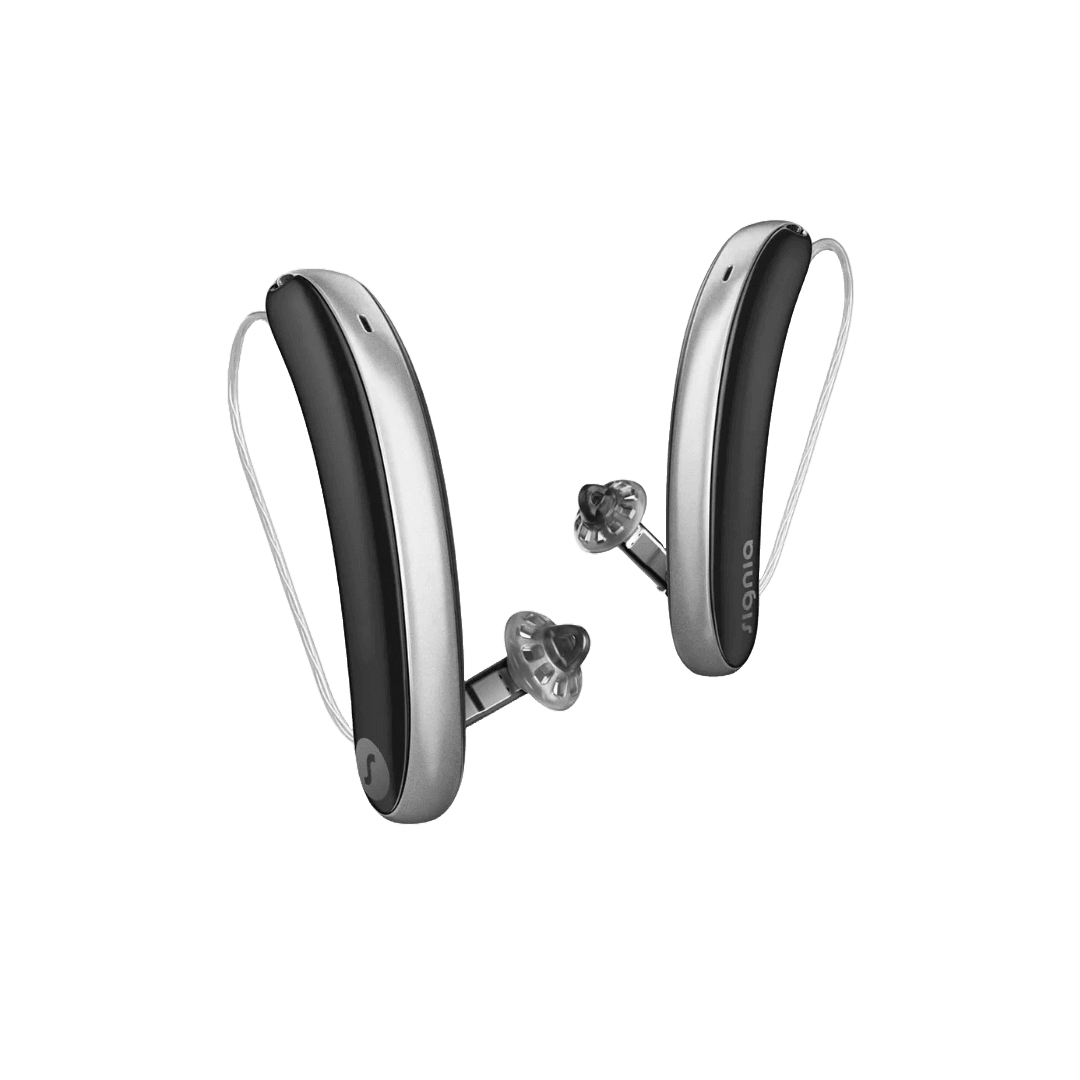
BTE Hearing Aid
A behind-the-ear hearing aid sits behind the ear and connects through a tube, dome, or earmould. It is durable and suitable for a wide range of hearing losses.

Hearing aids are not just devices that make sounds louder. They are personalised hearing aid devices that help improve speech clarity, listening comfort, and daily communication.
Many people search for a hearing machine, ear hearing machine, or hearing aid machine when they begin noticing hearing problems. The professional term is hearing aid, and the right device should always be selected after understanding your hearing test, lifestyle, comfort, and listening needs.
Whether you struggle during conversations, phone calls, meetings, family gatherings, or noisy places, the right hearing aid can help you reconnect with the sounds and people that matter.
A hearing aid is a small electronic device worn in or behind the ear. It is designed to make selected sounds clearer and easier to hear, especially speech.
If you are looking for the hearing aid meaning, hearing aid definition, or asking what a hearing aid is, the simple answer is this: a hearing aid helps people with hearing loss hear sounds and conversations more clearly. It does not cure hearing loss, but it supports better communication and listening comfort.
In Hindi, many people understand hearing aid meaning as sunne ki machine or hearing machine. However, not every small hearing machine is suitable for every person. A proper hearing aid should be chosen after a hearing test and audiologist consultation.
A problem in one ear or both ears should not be ignored. Even if one ear hears better, proper testing can help identify the right hearing aid solutions.
Before choosing hearing aids, it helps to understand how hearing is measured.
The normal hearing range for humans in decibels is generally considered to be around 0 to 25 dB HL in hearing test results. This is also called the normal decibel hearing range. If your hearing thresholds are higher than this range, it may indicate some level of hearing loss.
Normal hearing frequency usually includes the speech frequencies that help us understand voices clearly. A hearing test checks different frequencies because some people may hear low sounds well but struggle with high-pitched speech sounds.
This is why two people with hearing problems may need different hearing aid devices. One person may need support mainly for speech clarity, while another may need stronger support across many sound levels.
Important Note: The right hearing aid is not guessed. It is selected after understanding your hearing.
Modern digital hearing aids work by picking up sound, processing it, and sending adjusted sound into the ear.
For many people, the biggest benefit is not only hearing more sounds, but feeling more confident in conversations.
Hearing aids can help you follow speech more comfortably in daily conversations.
They can help you participate more actively in family discussions, shared moments, and emotional conversations.
With better hearing support, social gatherings may feel less tiring and more enjoyable.
Modern hearing aids can support clearer listening during calls, meetings, and work conversations.
They can help you notice important sounds like doorbells, traffic, announcements, alarms, or someone calling your name.
When sounds are clearer, the brain does not have to work as hard to guess missing words.
The best hearing aid is not the smallest or most advanced one. It is the one that suits your hearing loss, ear shape, comfort, and daily routine.
A behind-the-ear hearing aid sits behind the ear and connects through a tube, dome, or earmould. It is durable and suitable for a wide range of hearing losses.
RIC hearing aids are popular because they are discreet, comfortable, and suitable for many people.
In ear hearing aids are worn inside the ear and may be custom-made depending on the ear shape and hearing requirement.
An ITC hearing aid fits partly inside the ear canal and balances size with easier handling for some users.
CIC hearing aids fit deeper inside the ear canal and are less visible than many other styles.
IIC hearing aids are highly discreet, but suitability depends on ear canal size, wax, moisture, hearing level, and comfort.
Rechargeable hearing aids use a charging dock or case instead of frequent disposable battery changes.
Bluetooth hearing aids may support calls, streaming, app controls, and easier communication in selected models.
A bone conduction hearing aid sends sound vibrations through the bone and may be considered when regular air-conduction hearing aids are not suitable.
A BAHA hearing aid is a type of bone anchored hearing solution. Suitability should always be assessed by qualified professionals.
A CROS hearing aid may help when a person has very poor hearing in one ear and better hearing in the other ear.
Not every person needs every feature. The right features should be selected based on your hearing needs and lifestyle, not just technology trends.
Helps reduce unwanted background noise and improves listening comfort.
Help focus more on speech coming from a particular direction.
Reduces whistling sounds that may happen when amplified sound leaks back into the microphone.
Allows daily charging without frequent battery replacement.
Supports phone calls, audio streaming, and device connectivity in selected models.
Allows users to adjust volume, listening programs, and settings through a mobile app in selected models.
Some hearing aids include sound support features that may help people who experience ringing or buzzing.
Advanced hearing aids can adjust settings based on whether you are in quiet, noise, outdoors, or conversation.
There is no single best hearing aid for everyone. The right hearing aid depends on your test results, ear comfort, speech clarity, lifestyle, and support needs.
The best hearing aid is not chosen from a catalogue. It is selected after deeply understanding your hearing capability, dynamic lifestyle, and biological comfort.
A hearing aid works best when it is properly selected, fitted, programmed, and adjusted over time.
Your hearing is tested to understand the type and degree of hearing loss.
Your daily listening challenges, lifestyle, comfort needs, and expectations are discussed.
Suitable hearing aid styles and features are shortlisted based on your hearing profile.
You experience how the hearing aid feels and sounds in real listening situations.
The hearing aid is programmed according to your hearing test and comfort.
Adjustments are made after you use the device in daily life.
Continuous clinical follow-up and personalized aftercare adjustments are essential for long-term comfort and satisfaction.
If hearing loss is present in both ears, two hearing aids are recommended because the brain naturally uses both pathways to understand speech, locate spatial sound arrays, and cancel masking noise.
Clinical Directive: Hearing aids deliver peak medical utility when they are precisely custom-programmed, worn consistently, and systematically audited via regular clinical follow-ups.
Different people need hearing aids for different reasons. A child, senior citizen, working professional, or person with tinnitus may need different styles, features, and support.
Seniors are among the most common users of hearing aids. Early intervention and the right device can help maintain independence, support family connections, and improve overall quality of life.
Children need early support because hearing affects speech, language, learning, and social development.
Professionals may prefer discreet devices, Bluetooth hearing aids, meeting support, phone call clarity, and better group performance.
Selected digital hearing aids may offer sound support features that can help reduce tinnitus discomfort.
The right hearing aid solutions, counselling, family support, and follow-up care can help people participate more comfortably in everyday life.
Hearing aids need regular care to perform well. Since they are used daily and stay close to the ear, they can be affected by wax accumulation, environmental moisture, microscopic dust, and manual handling friction.
At Sound for Life, we support patients far beyond the initial fitting with continuous lifestyle counselling, micro-acoustic fine-tuning, hardware maintenance instruction, and compassionate long-term clinical care cycles.
Clinical Philosophy: The right hearing aid is not simply bought. It is systematically selected, custom fitted, iteratively adjusted, and professionally supported according to your distinct auditory anatomy and daily communicative environments.
We do not simply sell hearing devices. Our clinical approach helps you deeply understand your personal pathology, try advanced diagnostic styles in real listening situations, secure precision programming fittings, and access continuous expert support loops long after your initial appointment.
Clear answers to the most common questions people ask before choosing hearing aids.
A hearing aid is a small electronic device worn in or behind the ear. It helps make selected sounds clearer and easier to hear for people with hearing loss.
Hearing aid meaning refers to a device that supports hearing by making sounds, especially speech, clearer for people with hearing loss.
Many people use the term hearing machine, ear hearing machine, or hearing aid machine. However, a proper hearing aid is a professionally selected and programmed device based on a hearing test.
People who have difficulty understanding speech, hearing in noise, following conversations, or managing daily communication may benefit from hearing aids after a proper hearing test.
Common types include BTE, RIC, in ear hearing aids, ITC, CIC, IIC, rechargeable hearing aids, Bluetooth hearing aids, CROS, and bone conduction hearing aid options.
Digital hearing aids are modern hearing aid devices that process sound through a digital chip and can be programmed according to a person’s hearing test and listening needs.
Bluetooth hearing aids can connect with smartphones and other compatible devices for calls, audio streaming, app control, and easier communication.
The best hearing aid depends on your hearing test, ear shape, comfort, lifestyle, and audiologist recommendation. There is no single best hearing aid for everyone.
Some people explore Amazon hearing aids or hearing aids online, but it is safer to get a hearing test and professional guidance before choosing a device.
No. Hearing aids do not cure hearing disability or hearing loss. They support clearer hearing, better communication, and improved participation in daily life.